
Business Card Sleeves vs. Holders vs. Cases: Which Is Best?
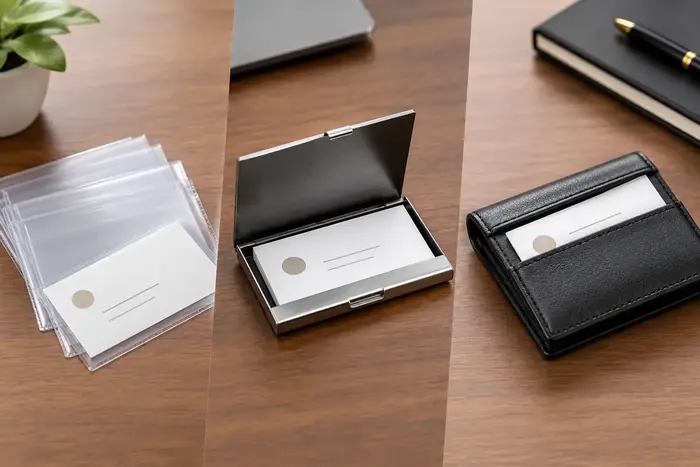
A business card may be small, but the impression it leaves can last long after a meeting ends. A bent corner, a fingerprint or a scuffed surface can make an otherwise professional card look careless. It is important to choose the right storage option, whether you exchange cards at networking events, meet prospective clients or represent a growing brand.
Sleeves, holders and cases each offer different levels of protection, convenience and presentation. Which option makes the most sense for your professional needs? Let’s compare them in this blog and find out the best one for your brand.
What Is The Difference Between Sleeves, Holders and Cases?
Each option serves a slightly different purpose, from keeping individual cards pristine to organizing a complete collection. It makes it easier to understand these differences and choose a practical accessory without compromising the presentation of your brand.
1. Business Card Sleeves: Simple Everyday Protection
Business card sleeves are lightweight covers that are usually made from clear plastic, paper or protective film. They can help you to prevent scratches, moisture marks and everyday handling damage. They are particularly useful when you are distributing cards at exhibitions or placing individual cards inside presentation folders.
2. Business Card Holders: Organized And Accessible
A holder can keep several cards together, which makes them easy to retrieve during meetings. Desktop holders can work well at reception counters, and portable versions suit professionals who attend networking events. Their main advantage is accessibility, especially when cards need to remain neatly arranged throughout a busy working day.
3. Business Card Cases: Protection On The Move
Cases typically feature rigid construction, leather, metal finishes or durable synthetic materials. They can protect cards against crushing and bending inside bags or pockets. A well designed case can also become a professional accessory, particularly for consultants, sales representatives, executives and business owners who regularly meet new contacts.
Which Option Presents Your Business Card Best?
The right choice can depend on how people encounter your card and what impression you want to create. You should consider the setting, your budget and the level of protection your printed materials require.
● Match Protection To Your Card Quality
You should carefully handle premium printing. Luxury cards may feature textured finishes, foil details or thick stocks that benefit from individual sleeves or a sturdy case. A thin cover can help you prevent surface scratches, and rigid storage can help you to preserve corners and edges during travel.
● Balance Appearance With Practicality
Presentation accessories should complement the card instead of distracting from it. Minimalist metal cases suit contemporary corporate branding, and leather finishes can convey a traditional and established image. If brands are coordinating the storage accessory with the card’s finish as those investing in custom luxury business cards do, it can create a more consistent experience.
● Consider Your Professional Environment
A reception desk can benefit from an attractive holder that displays cards clearly and keep them within reach. A compact case is often more practical for off-site meetings. Freelancers who work from cafés or shared offices may prefer something lightweight that slips easily into a laptop bag.
What Steps Should You Follow To Choose The Right Option?
A few straightforward checks can help you to avoid buying an accessory that looks impressive but fails in everyday use. You should think about your routine before focusing on color, material or price.
1. Assess How Many Cards You Carry
Sleeves may be sufficient if you carry only a handful. Professionals who are distributing luxury paper business cards throughout the day generally benefit from a case with enough capacity to prevent overcrowding.
2. Check Dimensions And Material
Standard cards are commonly around 3.5 × 2 inches in the United States, but their dimensions depend on the region. You can measure your cards before purchasing, especially if they have unusual shapes or thicker stocks.
3. Test Accessibility And Durability
You should choose a holder that can release cards easily without bending them. Must check closures, hinges and internal surfaces on cases and avoid tight sleeves that could damage delicate finishes when cards are inserted or removed.
Frequently Asked Questions
1. Can business cards damaged inside plastic sleeves?
Yes, business cards can get damaged if you are choosing poorly sized sleeves, and they can bend corners or create friction when cards are inserted and removed. Low quality plastic may also scratch delicate finishes. You should choose sleeves that fit comfortably and keep them clean to reduce the risk of marks or surface damage.
2. Are metal business card cases better than leather ones?
Metal cases generally provide firmer protection against pressure and bending, and leather cases provide a softer and more traditional appearance. No one is universally better. You should consider your working environment, preferred style and how frequently the case will be carried.
3. How many business cards should a portable case hold?
Capacity of the portable case often depends on card thickness and the case design. Many portable cases accommodate a few dozen standard cards, but thicker stocks reduce capacity. You should choose a size that meets your networking needs without forcing cards into a crowded compartment.
4. Should I display business cards vertically or horizontally?
Orientation works as long as the card can stay readable and easy to retrieve. Horizontal displays are popular for traditional cards, and vertical holders are perfect for compact desks. You must match the holder to your card layout and available counter space.
5. How should I store unused business cards at the office?
You should keep unused cards in a clean, dry drawer or protective box, away from direct sunlight and excessive humidity. Must store them flat and avoid placing heavy objects on top. This can help you to preserve their shape, colour and finish until they are ready to use.
Final Verdict
Sleeves, holders, and cases can all protect business cards, but each is best for different situations. Sleeves can provide you with lightweight coverage, holders can keep cards organized and accessible, and cases can provide stronger protection during travel. Your ideal choice depends on card quality, working habits and the impression you want to leave. Invest in an option that can support your professional image without sacrificing convenience. Even the smallest details can influence how people remember your brand.

When it comes to designing corporate stationery with cool and customized designs, Jeremy tops the list. He is an integral part of the design team at LuxeBusinessCards.com. Jeremy uses his industrial insights and technical knowledge to create detailed, comprehensive guides and blogs that cover all the crucial aspects of luxury business cards and their production. He follows all the latest industry trends about business cards, event invitations, letterheads, and much more. Whether you want to know more about why NFC metal cards are getting popular or are planning to rebrand your company with a stunning letterhead, his valuable tips might be the game-changer for you. Explore his latest articles and find out what valuable information he has to share with you about business cards.